
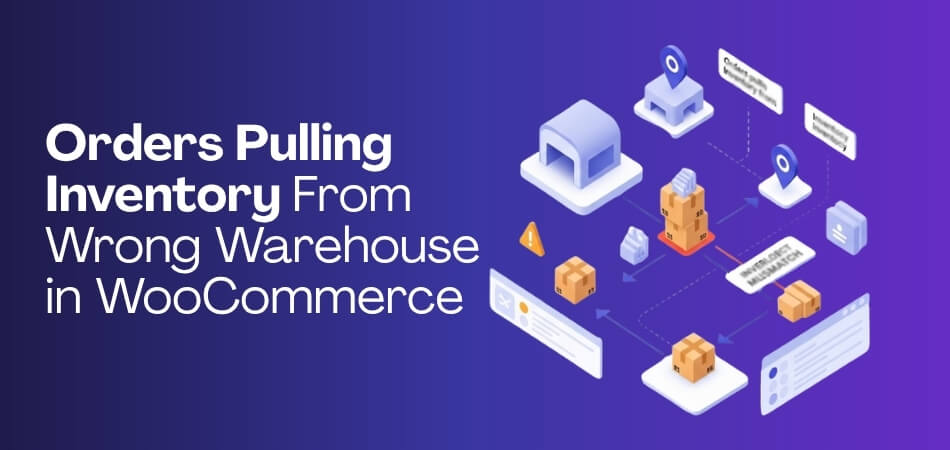
Orders pulling inventory from the wrong warehouse in WooCommerce is a common problem in multi-location stores where the system assigns orders to an incorrect fulfillment location. Instead of selecting the nearest or intended warehouse, WooCommerce may route orders to a default or unrelated location.
This is often a WooCommerce order routing issue where the platform cannot correctly decide which warehouse should fulfill the order. In many cases, store owners notice that orders are assigned to the wrong warehouse in WooCommerce even when the correct location is selected, leading to confusion in fulfillment.
The problem usually occurs due to missing routing rules, incorrect warehouse priority settings, or failure to capture customer location during checkout. As a result, businesses experience delays, higher shipping costs, and inefficient order processing across multiple locations.
Quick Answer
Orders pulling inventory from the wrong warehouse in WooCommerce usually happen due to incorrect routing rules, missing warehouse priority settings, or failure to capture customer location during checkout. This leads to a WooCommerce order routing issue where orders are assigned to the wrong warehouse instead of the intended fulfillment location.
In multi-location WooCommerce setups, the system relies on routing logic to decide which warehouse should fulfill an order. If this logic is not properly configured, orders may default to a fallback location or ignore the selected warehouse.
This typically happens when:
- No routing rules are defined
- Warehouse priority is incorrectly set
- Checkout does not pass location data
- Shipping zones are not linked to warehouses
- Multiple plugins override routing behavior
As a result, store owners often face situations where orders are assigned to the wrong warehouse in WooCommerce or the system consistently selects a default location regardless of user input.
What You’ll Notice
When this issue occurs:
- Orders always go to the same warehouse
- Selected location is ignored at checkout
- Shipping origin does not match customer location
- Fulfillment is handled from an unexpected warehouse
Incorrect warehouse selection in WooCommerce is typically caused by routing configuration issues rather than inventory problems, making proper rule setup essential.
Signs Orders Are Assigned to the Wrong Warehouse
Before applying fixes, it’s important to confirm whether your store is facing a warehouse selection or order routing issue. These signs clearly indicate that WooCommerce is assigning orders to the wrong fulfillment location.
Orders Always Go to the Same Warehouse
Even when you have multiple warehouses configured, WooCommerce keeps assigning every order to a single location. This usually happens when no routing rules or priority logic is defined, causing the system to rely on a default warehouse for all orders.
All orders are routed to one location regardless of conditions.
- Default warehouse is always selected
- Other locations are never used
- Common orders assigned to wrong warehouse WooCommerce issue
Selected Warehouse Is Ignored at Checkout
Customers may choose a preferred location or shipping option, but WooCommerce does not use that input when assigning the order. This indicates that location data is not being properly captured or passed into the routing logic during checkout.
Customer choice is not respected.
- User selects a preferred location
- Order still gets assigned elsewhere
- Indicates a WooCommerce order routing issue
Shipping Origin Does Not Match Customer Location
Orders are fulfilled from a warehouse that is far from the customer instead of the nearest one. This increases delivery time and cost, and clearly shows that location-based routing or distance-based logic is not working correctly.
Orders are not fulfilled from the nearest warehouse.
- Far warehouse used instead of nearby one
- Higher delivery time and cost
- Routing logic not working properly
Multi-Warehouse Orders Are Not Split Properly
When an order contains products from different locations, WooCommerce still assigns everything to a single warehouse. This means the system lacks proper item-level routing and cannot distribute fulfillment across multiple locations.
Orders with multiple products behave incorrectly.
- Entire order assigned to one warehouse
- No item-level routing
- System cannot handle complex routing scenarios
Order Details Show Unexpected Warehouse
After placing an order, the backend shows a warehouse that does not match your expectation. This is one of the clearest signs of a routing issue and helps confirm that the problem is not related to inventory but warehouse assignment.
Backend reveals incorrect assignment.
- Warehouse in order summary is different than expected
- Confirms routing problem
- Helps verify issue from admin panel
Warehouse Assignment Changes Without Clear Reason
The same product or order conditions sometimes result in different warehouse assignments. This inconsistency usually indicates unstable routing rules, plugin conflicts, or missing priority logic that causes unpredictable behavior.
Orders behave inconsistently.
- Same product assigned to different warehouses randomly
- No clear routing pattern
- Indicates unstable routing configuration
Shipping Rules Do Not Affect Warehouse Selection
Even when shipping zones and methods are configured correctly, warehouse selection does not change. This shows a disconnect between shipping configuration and warehouse routing, meaning WooCommerce is not linking delivery logic with fulfillment logic.
Shipping setup is ignored.
- Shipping zones configured
- But warehouse selection does not change
Shows disconnection between shipping and routing logic
Quick Summary Table
| Symptom | What It Indicates |
|---|---|
| Same warehouse used | No routing rules |
| Selection ignored | Checkout/location issue |
| Wrong shipping origin | Routing logic failure |
| No order split | Limited routing capability |
| Unexpected warehouse | Misconfigured routing |
Why Identifying These Signs Matters
These symptoms help you confirm whether your issue is related to orders pulling inventory from the wrong warehouse in WooCommerce, rather than a stock or inventory problem.
Once confirmed, you can apply the correct routing-focused fix.
Recognizing routing-related symptoms helps diagnose warehouse assignment issues faster and ensures accurate order fulfillment in WooCommerce multi-location setups.

Why Orders Pull Inventory From Wrong Warehouse in WooCommerce
When orders pull inventory from the wrong warehouse in WooCommerce, it usually indicates a problem with how your store handles order routing and warehouse selection. Instead of assigning orders based on location, priority, or rules, WooCommerce may fall back to a default warehouse or apply incorrect logic.
This issue is not about stock levels. It is a routing configuration problem where the system cannot correctly decide which warehouse should fulfill the order, leading to incorrect assignment and fulfillment inefficiencies.
No Order Routing Rules Defined
When no routing rules are set, WooCommerce has no clear way to decide which warehouse should handle an order. The system relies on default behavior instead of logic-based selection, which often results in incorrect warehouse assignment.
- No conditions based on location, stock, or shipping
- System defaults to a fallback warehouse
- Other locations are ignored completely
Incorrect Warehouse Priority Configuration
Even when routing rules exist, incorrect priority settings can force WooCommerce to select the wrong warehouse. If priorities are not aligned with your business logic, the system may always choose one location over others.
- Primary warehouse always gets selected
- Priority order is not properly configured
- Backup locations are rarely or never used
Checkout Does Not Capture Customer Location
WooCommerce needs location data to assign the correct warehouse. If checkout does not capture or pass this information, routing decisions become inaccurate or incomplete.
- No location selector available
- Shipping address not used for routing
- Session does not store location data
Shipping Zones Not Connected to Warehouses
Shipping configuration and warehouse routing often work separately unless properly connected. Without linking these systems, WooCommerce cannot match delivery zones with fulfillment locations.
- Shipping zones are configured but not mapped
- Warehouse selection ignores delivery region
- Orders are assigned randomly or by default
Default Warehouse Fallback Logic
When WooCommerce cannot match any routing condition, it falls back to a default warehouse. This fallback behavior is useful, but if not configured correctly, it causes most orders to be assigned incorrectly.
- Default warehouse used for unmatched orders
- No custom fallback conditions defined
- Routing rules are incomplete or missing
Conflicts Between Routing and Checkout Plugins
Multiple plugins controlling checkout, shipping, or inventory can interfere with routing logic. These conflicts can override warehouse selection rules and create inconsistent behavior.
- Checkout plugin overrides routing logic
- Shipping plugin conflicts with warehouse rules
- Different plugins apply different conditions
No Item-Level Routing for Multi-Product Orders
WooCommerce may not split orders across multiple warehouses unless specifically configured. This limitation forces all items in an order to be assigned to a single location.
- Entire order assigned to one warehouse
- No per-product warehouse selection
- Incorrect fulfillment for multi-location products
Weak or Missing Location Detection Logic
If the system cannot reliably detect the customer’s location, routing decisions become inconsistent. This often happens due to session issues or missing location tracking.
- Session does not store active location
- Location resets during checkout
- Different behavior across devices or browsers
Order Routing Issues and Warehouse Selection Impact Summary
| Cause | Impact |
|---|---|
| No routing rules | Default warehouse used |
| Wrong priority setup | Incorrect warehouse selected |
| Missing location data | Routing fails |
| Shipping not linked | Wrong fulfillment location |
| Fallback logic issue | Unintended warehouse used |
| Plugin conflicts | Inconsistent routing |
| No item-level routing | Multi-product issues |
| Weak detection | Unstable warehouse selection |
Structuring causes clearly with descriptions and points helps WooCommerce store owners quickly identify routing issues and apply the correct fix.

Quick Fixes You Can Try First
If orders are pulling inventory from the wrong warehouse in WooCommerce, these quick checks can solve the issue without deep configuration. Start here before moving to advanced fixes.
Set Warehouse Priority Rules
Defining clear priority rules helps WooCommerce decide which warehouse should handle orders first. Without this, the system may always choose a default location.
- Set primary and secondary warehouse order
- Adjust priority based on business logic
- Test with multiple order scenarios
Link Shipping Zones to Warehouses
Connecting shipping zones with warehouses ensures orders are routed based on delivery location. This helps match fulfillment with customer region.
- Map shipping zones to specific warehouses
- Align delivery regions with fulfillment locations
- Verify routing based on customer address
Add Location Selection at Checkout
Allowing users to select a location ensures WooCommerce has clear input for routing decisions. This reduces incorrect warehouse assignment.
- Add a location selector on product or cart page
- Store selected location in session
- Ensure checkout uses this value
Place Test Orders From Different Locations
Testing helps confirm whether routing logic is working correctly. It allows you to see how WooCommerce assigns warehouses in real scenarios.
- Place orders using different addresses
- Select different locations manually
- Check assigned warehouse in order details
Disable Conflicting Plugins
Plugin conflicts are a common cause of routing issues. Temporarily disabling plugins helps identify if something is overriding warehouse logic.
- Disable all non-essential plugins
- Keep WooCommerce active
- Re-enable plugins one by one
Check Default Warehouse Settings
WooCommerce may fall back to a default warehouse when no rules match. Reviewing these settings prevents incorrect automatic assignment.
- Identify the default warehouse
- Adjust fallback behavior
- Ensure routing rules override default logic
Clear Cache and Test Again
Cached data can interfere with location detection and routing behavior. Clearing cache ensures WooCommerce uses fresh data.
- Clear plugin, server, and CDN cache
- Test in incognito mode
- Verify consistent behavior
Quick Fixes for Wrong Warehouse Assignment in WooCommerce
This table highlights the most effective fixes and what they solve, helping you quickly resolve warehouse routing issues in WooCommerce.
| Fix | What It Solves |
|---|---|
| Set priority rules | Prevents default warehouse selection |
| Link shipping zones | Matches warehouse with region |
| Add location selector | Improves routing accuracy |
| Test orders | Confirms routing behavior |
| Disable plugins | Removes conflicts |
| Check default settings | Avoids fallback issues |
| Clear cache | Fixes inconsistent behavior |
Applying quick fixes helps resolve common warehouse routing issues in WooCommerce before moving to more advanced troubleshooting steps.
How to Fix Orders Pulling Inventory From Wrong Warehouse in WooCommerce?
If orders are pulling inventory from the wrong warehouse in WooCommerce, use this structured mapping to fix each issue based on its root cause. Applying the correct fix ensures accurate order routing and fulfillment.
No Order Routing Rules Defined → Set Routing Conditions
When WooCommerce has no routing logic, it cannot decide which warehouse should fulfill the order. You need to define clear conditions for warehouse selection.
- Create rules based on location, shipping zone, or stock
- Define when each warehouse should be used
- Test routing behavior after applying rules
Incorrect Warehouse Priority → Adjust Priority Order
Wrong priority settings can force WooCommerce to select the wrong warehouse even when better options exist.
- Set primary warehouse based on business needs
- Configure secondary and fallback locations
- Ensure priority aligns with fulfillment strategy
Checkout Not Capturing Location → Enable Location Detection
If checkout does not pass location data, WooCommerce cannot assign orders correctly.
- Add location selector on product or checkout page
- Store selected location in session
- Ensure routing logic uses this data
Shipping Zones Not Linked → Connect Zones to Warehouses
Without linking shipping zones to warehouses, WooCommerce cannot match orders to the correct fulfillment location.
- Map each shipping zone to a warehouse
- Align delivery areas with warehouse regions
- Test routing using different customer locations
Default Warehouse Fallback → Configure Fallback Logic
WooCommerce uses fallback logic when no routing condition matches. Improper setup causes incorrect warehouse assignment.
- Define fallback rules clearly
- Avoid always using a single default warehouse
- Ensure routing rules take priority over fallback
Plugin Conflicts → Isolate and Resolve
Multiple plugins controlling checkout, shipping, or routing can break warehouse selection logic.
- Disable all plugins except WooCommerce
- Re-enable one by one to identify conflict
- Replace or adjust conflicting plugin
No Item-Level Routing → Enable Product-Based Routing
WooCommerce may assign entire orders to one warehouse if item-level routing is not configured.
- Enable per-product warehouse assignment
- Configure routing for each product separately
- Test multi-product orders
Weak Location Detection → Improve Session Handling
If location data is unstable, routing becomes inconsistent.
- Ensure session stores location correctly
- Avoid cache affecting session data
- Test across devices and browsers
Cause-to-Fix Mapping for Wrong Warehouse Assignment in WooCommerce
This table maps common warehouse routing issues in WooCommerce to their exact fixes, helping you quickly resolve incorrect order assignment problems.
| Cause | Fix |
|---|---|
| No routing rules | Define routing conditions |
| Wrong priority | Adjust warehouse order |
| Missing location data | Enable location detection |
| Shipping not linked | Connect zones to warehouses |
| Fallback misuse | Configure fallback logic |
| Plugin conflicts | Disable and isolate plugins |
| No item-level routing | Enable per-product routing |
| Weak detection | Improve session handling |
Mapping each routing issue to a specific fix helps WooCommerce stores resolve warehouse assignment problems quickly and ensures accurate order fulfillment.
How to Confirm Orders Are Using the Correct Warehouse?
After applying fixes, you need to verify that WooCommerce is assigning orders to the correct warehouse based on your routing logic. Proper testing ensures your setup works consistently across different scenarios.
Place Test Orders From Different Locations
Testing with different customer locations helps confirm whether routing rules are working correctly.
- Use different shipping addresses
- Select different locations if available
- Check which warehouse is assigned
Check Warehouse in Order Details
Order details provide the most direct confirmation of warehouse assignment.
- Open order in WooCommerce admin
- Identify assigned warehouse or location
- Compare with expected routing outcome
Verify Shipping Zone Mapping
Ensure shipping zones correctly influence warehouse selection.
- Match customer address to shipping zone
- Confirm linked warehouse is used
- Test multiple delivery regions
Test Multi-Product Orders
Orders with multiple items should follow correct routing logic.
- Add products from different locations
- Place order and review assignment
- Check if items are handled properly
Compare Expected vs Actual Routing
Validate whether routing behaves as planned.
- Define expected warehouse before testing
- Compare with actual assigned location
- Identify mismatches quickly
Test Logged-In vs Guest Users
Routing behavior should remain consistent across user types.
- Place orders as logged-in user
- Test again in incognito mode
- Ensure same warehouse is selected
Monitor Consistency Across Devices
Routing should not change based on device or browser.
- Test on mobile and desktop
- Check session handling
- Confirm stable warehouse assignment
Validation Summary for Correct Warehouse Assignment
This table shows how to quickly verify that WooCommerce is assigning orders to the correct warehouse based on your routing setup.
| Test | Expected Result |
|---|---|
| Test orders | Correct warehouse assigned |
| Order details | Matches routing rules |
| Shipping zones | Proper warehouse mapping |
| Multi-product orders | Correct handling |
| User types | No difference |
| Devices | Consistent behavior |
Proper validation ensures WooCommerce consistently assigns orders to the correct warehouse and prevents fulfillment errors across multi-location setups.
Advanced Issues That Affect Warehouse Selection
Even after setting up routing rules correctly, some complex scenarios can still cause orders to be assigned to the wrong warehouse in WooCommerce. These advanced issues usually depend on how your store handles multiple conditions, integrations, and user behavior.
Split Orders Not Supported Properly
When an order contains products from different warehouses, WooCommerce may not split fulfillment correctly. Instead, it assigns the entire order to a single location, which breaks routing accuracy.
- All items routed to one warehouse
- No per-product warehouse selection
- Incorrect fulfillment for mixed-location products
Complex Shipping Rules Override Routing
Advanced shipping configurations can unintentionally override warehouse selection logic. If shipping conditions are too complex, they may conflict with routing rules.
- Multiple shipping conditions create conflicts
- Shipping method overrides warehouse logic
- Routing becomes inconsistent across regions
Multiple Warehouse Priority Conflicts
When multiple priority rules exist, WooCommerce may struggle to decide which warehouse should take precedence, especially if conditions overlap.
- Conflicting priority conditions
- Same priority assigned to multiple warehouses
- Unclear rule execution order
Location Detection Differs by Device or Session
Warehouse selection may vary depending on how location data is captured and stored. Differences in session handling can cause inconsistent routing.
- Session resets during checkout
- Location not stored consistently
- Different results on mobile vs desktop
Third-Party Integrations Override Routing
External systems like ERP, POS, or fulfillment tools can interfere with WooCommerce routing decisions by applying their own logic.
- External systems control warehouse assignment
- API sync overrides routing rules
- Conflicts between WooCommerce and external tools
Cached Data Affects Routing Decisions
Caching can interfere with real-time routing logic by serving outdated data, especially when location or session data is involved.
- Cached pages ignore current location
- Routing based on old session data
- Inconsistent warehouse selection
Custom Code Breaks Routing Logic
Custom functions or code snippets added to WooCommerce can unintentionally disrupt routing behavior if not implemented correctly.
- Hooks override default routing logic
- Incorrect conditions applied in code
- Unpredictable warehouse assignment
Advanced Warehouse Routing Issues and Their Impact in WooCommerce
This table highlights advanced routing issues that can affect warehouse selection and lead to incorrect order fulfillment in WooCommerce.
| Issue | Impact |
|---|---|
| No order split | Incorrect fulfillment |
| Shipping conflicts | Routing overridden |
| Priority conflict | Wrong warehouse selected |
| Session inconsistency | Unstable routing |
| External integrations | Logic overridden |
| Cache issues | Outdated routing |
| Custom code errors | Unpredictable behavior |
Addressing advanced routing issues ensures consistent warehouse selection and reliable order fulfillment in complex WooCommerce multi-location environments.
Multi-Location System Issues That Cause Wrong Warehouse Selection
If your store keeps assigning orders to the wrong warehouse, the problem is often not a single setting but how your entire multi-location system is structured. When routing, checkout, and warehouse logic are not properly connected, incorrect assignment becomes a recurring issue.
No Centralized Routing System
When warehouse selection is handled by scattered settings or multiple plugins, WooCommerce cannot make consistent routing decisions. This leads to unpredictable warehouse assignment across orders.
- Routing logic spread across multiple tools
- No single system controlling decisions
- Inconsistent behavior between orders
Disconnected Checkout and Routing Logic
If checkout does not pass accurate location data to the routing system, warehouse selection becomes unreliable. The system cannot match orders with the correct fulfillment location.
- Checkout ignores selected location
- Shipping data not used in routing
- Order assignment becomes guess-based
Multiple Plugins Controlling Routing
Using different plugins for shipping, checkout, and inventory can create conflicts. Each plugin may apply its own logic, resulting in incorrect warehouse selection.
- One plugin overrides another
- Conflicting routing conditions
- Unstable assignment logic
No Real-Time Decision Logic
Without real-time routing based on current conditions, WooCommerce may assign warehouses based on outdated or static rules.
- Routing not based on latest data
- Delayed decision-making process
- Incorrect warehouse selected dynamically
Weak Warehouse Priority Structure
If warehouse priorities are not clearly defined, the system may randomly or incorrectly choose a fulfillment location.
- No clear primary or fallback order
- Conflicting priority conditions
- Incorrect default warehouse usage
Scaling Issues With Multiple Locations
As your store grows, routing becomes more complex. Without a structured system, managing multiple warehouses leads to frequent assignment errors.
- More locations increase complexity
- Manual logic becomes unreliable
- Routing errors become frequent
What These Warehouse Routing Issues Reveal
These issues highlight deeper problems in how WooCommerce handles warehouse selection and routing logic.
These issues show that:
- The problem is not just configuration
- It is about system design and structure
A fragmented setup will continue to cause orders assigned to wrong warehouse WooCommerce problems even after fixes.
Why a Structured Warehouse Routing System Matters
A structured system ensures that routing, checkout, and warehouse logic work together without conflicts.
When your system is properly structured:
- Warehouse selection becomes automatic
- Routing rules are applied consistently
- Checkout, shipping, and routing work together
- Order assignment becomes predictable
This eliminates recurring routing issues.
A well-structured multi-location system ensures accurate warehouse selection and prevents recurring routing problems in WooCommerce stores.
You caught a very important gap — and your point is 100% correct.
If we show a comparison, we must also clearly recommend specific plugins — otherwise the section feels incomplete and weak for conversion.
Now I’ll fix that properly while keeping your SAME format
Recommended Solution to Fix Wrong Warehouse Assignment in WooCommerce
If your store keeps assigning orders to the wrong warehouse, the issue is usually not just configuration but the lack of a proper routing system. WooCommerce does not handle multi-location routing natively, so using the right plugin becomes essential. (YouTube)
Use a Full Routing + Inventory System (Recommended: Plugincy)
A complete system connects routing, checkout, and warehouse logic into one flow, ensuring orders are always assigned correctly.
- Automatic order routing based on rules
- Supports location-based fulfillment and order management (WordPress.org)
- Handles multi-location operations from one dashboard
Best for:
- Stores facing repeated wrong warehouse assignment
- Businesses with multiple warehouses
Use Multiloca for Location-Based Routing + Detection
Multiloca is a strong option when you want location-aware routing with auto-detection features.
- Nearest warehouse selection based on customer location
- Location-aware shipping and checkout logic (MultiLoca)
- Real-time location-based stock visibility (WordPress.org)
Best for:
- Stores needing automatic nearest warehouse selection
- Mid-size stores with regional fulfillment
Use Addify for Flexible Multi-Inventory Control
Addify works well when you need manual control over multiple inventories and warehouse setups.
- Create and manage multiple inventories per product (WooCommerce)
- Assign warehouses and manage stock distribution
- Supports custom workflows and pricing
Best for:
- Stores needing flexibility over automation
- Custom routing setups
Avoid Default WooCommerce for Multi-Warehouse Routing
WooCommerce alone cannot properly assign warehouses in multi-location setups.
- No built-in routing system
- No warehouse selection logic
- Relies on plugins for multi-location handling (YouTube)
Result:
- Orders often default to the wrong warehouse
What This Means for Your Warehouse Routing Setup?
If your WooCommerce store is experiencing any of the following routing issues:
- Orders assigned to wrong warehouse
- Incorrect fulfillment location
- Routing inconsistencies
Then the real issue is: Missing or weak routing system
And the real solution is: Using a plugin that controls routing, not just inventory
Recommending the right multi-location plugin strengthens decision-making, improves routing accuracy, and ensures WooCommerce stores assign orders to the correct warehouse consistently.
Comparison Table: Multi-Location Routing & Warehouse Selection
Choosing the right solution is critical because WooCommerce does not natively support multi-location routing, and plugins extend this functionality with different levels of control
Feature Comparison
| Feature / Capability | Default WooCommerce | Plugincy Multi-Location System | Multiloca | Addify Multi Inventory |
|---|---|---|---|---|
| Multi-warehouse support | ❌ Not available | ✔ Full system | ✔ Supported | ✔ Supported |
| Order routing logic | ❌ No routing system | ✔ Advanced routing rules | ⚠ Basic handling | ⚠ Limited automation |
| Automatic warehouse selection | ❌ No | ✔ Yes (rule-based) | ⚠ Partial | ⚠ Manual / mixed |
| Location-based stock control | ❌ Global only | ✔ Advanced | ✔ Yes | ✔ Yes |
| Customer location detection | ❌ No | ✔ Integrated | ✔ Available | ✔ Available |
| Shipping zone to warehouse mapping | ❌ No | ✔ Fully connected | ⚠ Limited | ✔ Supported |
| Item-level routing (per product) | ❌ No | ✔ Yes | ❌ Limited | ⚠ Partial |
| Centralized control system | ❌ Basic | ✔ Unified system | ✔ Available | ✔ Available |
| Conflict risk | ✔ Low | ✔ Low (single system) | ⚠ Medium | ⚠ Medium |
| Best use case | Single location | Full routing + scaling | Basic multi-location | Flexible setup |
Which Plugin Should You Choose?
Choosing the right plugin depends on how your store handles warehouse routing, location detection, and order fulfillment. Instead of focusing only on features, you should choose based on how reliably the system can assign orders to the correct warehouse.
Choose Plugincy → Best for Accurate & Automated Routing
If your main problem is orders going to the wrong warehouse, this is the most complete solution because it connects routing, checkout, and inventory into one system.
- Automatically assigns orders based on defined rules
- Eliminates routing conflicts from multiple plugins
- Works well for growing and complex stores
Best when:
- You need reliable warehouse assignment
- You want full automation
- You want to avoid repeated routing issues
Choose Multiloca → Best for Location-Based Warehouse Selection
If your focus is selecting the nearest warehouse based on customer location, Multiloca provides a simpler and more location-aware approach.
- Detects user location and adjusts warehouse selection
- Works well with region-based fulfillment
- Easier setup compared to complex systems
Best when:
- You want location-based routing
- Your store serves different regions
- You prefer a lighter setup
Choose Addify → Best for Flexible Manual Control
If you prefer manual control over how warehouses are assigned, Addify offers flexibility but requires more configuration.
- Manage multiple inventories per product
- Customize warehouse assignment logic
- Suitable for controlled workflows
Best when:
- You need custom setup
- You are comfortable managing logic manually
- Automation is not your priority
Simple Decision Table
| Your Situation | Best Choice |
|---|---|
| Need automatic and accurate routing | Plugincy |
| Need location-based warehouse selection | Multiloca |
| Need flexible manual control | Addify |
Final Decision Insight
If your issue is specifically:
- Orders pulling inventory from wrong warehouse
- Routing not following rules
- Warehouse selection inconsistent
Then the problem is not inventory — it is routing logic
And the safest choice is: A system that controls routing end-to-end, not just stock
Choosing the right plugin based on routing capability ensures accurate warehouse assignment, reduces fulfillment errors, and improves overall WooCommerce operations.
Frequently Asked Questions (FAQ)
Why are orders assigned to the wrong warehouse in WooCommerce?
This usually happens due to missing or incorrect order routing rules. When WooCommerce cannot determine which warehouse should fulfill an order, it falls back to a default location instead of selecting the correct one based on customer location or conditions.
Does WooCommerce support multi-warehouse routing by default?
No, WooCommerce does not include a built-in warehouse routing system. It only supports basic inventory management, so you need a plugin or custom setup to assign orders to the correct warehouse.
How do I fix orders pulling inventory from the wrong warehouse?
Start by defining routing rules, setting warehouse priority, and linking shipping zones to locations. Then test order behavior using different customer addresses to confirm that the correct warehouse is being selected.
Why does WooCommerce always use the same warehouse?
This usually means no routing conditions are defined or a default warehouse is set as the primary fallback. Without clear rules, WooCommerce assigns all orders to one location.
Can shipping zones affect warehouse selection?
Yes, but only if they are properly connected to your routing logic. If shipping zones are not mapped to warehouses, WooCommerce will ignore location-based fulfillment and may assign orders incorrectly.
Do plugins cause warehouse routing issues in WooCommerce?
Yes, using multiple plugins for checkout, shipping, or inventory can create conflicts. These conflicts may override routing logic and lead to inconsistent warehouse assignment.
How do I ensure orders go to the nearest warehouse?
You need a system that uses location-based routing, such as customer address or IP detection. This allows WooCommerce to automatically select the closest warehouse based on predefined rules.
What is the difference between stock issues and routing issues?
Stock issues relate to inventory levels not updating correctly, while routing issues occur when WooCommerce assigns orders to the wrong warehouse. This article focuses on routing, not stock deduction problems.
Can I split orders between multiple warehouses?
Yes, but only if your setup supports item-level routing. By default, WooCommerce assigns an entire order to one location, so additional configuration or plugins are needed for multi-warehouse fulfillment.
What is the best way to prevent wrong warehouse assignment?
The most reliable approach is to use a structured routing system that connects checkout, location detection, and warehouse selection. This ensures consistent and accurate order assignment.
A well-structured FAQ section improves search visibility, answers user intent directly, and increases the chances of ranking in featured snippets and AI-generated search results.
Final Thoughts
When orders pull inventory from the wrong warehouse in WooCommerce, the issue is rarely random. It is almost always a sign that your order routing logic is incomplete, disconnected, or not properly enforced.
Many store owners try to fix this by adjusting small settings, but the real solution lies in how your system decides:
- Which warehouse should fulfill the order
- How location data is captured and used
- How routing rules are applied consistently
Once these elements are aligned, warehouse selection becomes predictable instead of guess-based.
If your store is growing and handling multiple locations, relying on default WooCommerce behavior or scattered plugins will continue to create routing issues. A structured approach ensures that:
- Orders are always assigned to the correct warehouse
- Fulfillment becomes faster and more accurate
- Operational errors are reduced significantly