
WooCommerce multi-location inventory not updating is a common issue for stores managing stock across multiple warehouses, branches, or locations. You may notice that stock levels do not sync correctly, products remain available after selling out, or inventory changes are not reflected across locations.
This problem usually happens when there is a disconnect between stock management logic, location rules, or plugin configuration. WooCommerce relies on accurate stock updates to manage orders, fulfillment, and availability, so even small issues can lead to overselling or incorrect stock display.
If not fixed, this can cause order errors, customer frustration, and loss of trust in your store.
Quick Answer
WooCommerce multi-location inventory not updating usually happens due to sync issues between stock sources, plugin conflicts, caching, or incorrect configuration of location-based inventory rules. When inventory updates fail, stock changes made in one location are not reflected across other locations or during checkout.
In multi-location setups, WooCommerce depends on plugins or custom logic to manage stock across different warehouses or stores. If the system is not properly configured, inventory updates may fail to sync in real time.
This typically occurs when:
- Stock is not correctly assigned to locations
- Sync settings are disabled or misconfigured
- Cache or AJAX delays prevent real-time updates
- Plugin conflicts interrupt inventory updates
- Orders do not correctly deduct stock from the assigned location
What You’ll Notice
When this issue occurs, you may see:
- Stock not reducing after orders
- Inventory showing incorrect quantities
- Products marked “in stock” when unavailable
- Location-wise stock not syncing properly
Multi-location inventory issues in WooCommerce are usually caused by configuration or synchronization problems that prevent accurate stock updates across locations.
Signs Your Multi-Location Inventory Is Not Updating in WooCommerce
Before fixing the issue, it’s important to identify whether your store is actually facing a multi-location inventory sync problem. These signs indicate that your WooCommerce inventory is not updating correctly across locations.

Stock Does Not Reduce After an Order
Orders are placed, but stock levels remain the same.
- Inventory is not deducted from the selected location
- WooCommerce stock not updating after checkout
- Risk of overselling increases
Different Locations Show Incorrect Stock Levels
Inventory appears inconsistent across warehouses or stores.
- One location shows stock while another shows zero
- Multi location stock not syncing WooCommerce
- Inventory mismatch between backend and frontend
Product Shows “In Stock” But Is Actually Out of Stock
Customers can still purchase unavailable products.
- Stock status not updating in real time
- WooCommerce inventory mismatch issue
- Leads to order fulfillment problems
Manual Updates Do Not Reflect Immediately
Changes made in the admin panel are delayed or ignored.
- Stock updates require page refresh
- Cache or sync delay issues
- Real-time inventory update not working
Cart and Checkout Use Wrong Stock Data
Inventory behaves differently during checkout.
- Product appears available but fails at checkout
- Stock deducted from the wrong location
- Location-based inventory logic not applied
Inventory Updates Work Only for Admin, Not Users
Admin sees correct stock, but customers see outdated values.
- Session or caching issues
- Frontend not syncing with backend
- Common in multi-location setups
Bulk or Central Inventory Changes Don’t Apply Everywhere
Updates made in a central system are not reflected globally.
- Stock Central or bulk updates fail
- Products not syncing across locations
- Indicates system-level sync failure
Quick Summary Table
| Symptom | What It Indicates |
| Stock not reducing | Sync or deduction issue |
| Location mismatch | Multi-location sync problem |
| Wrong stock status | Display or update delay |
| Admin vs frontend difference | Cache or session issue |
| Checkout mismatch | Validation or logic error |
Why Identifying Signs Matters
Recognizing these symptoms early helps you fix WooCommerce multi-location inventory not updating issues before they affect orders, customers, and revenue.
Identifying the correct symptoms is the first step toward resolving inventory update issues in WooCommerce multi-location setups.
Why WooCommerce Multi-Location Inventory Fails to Update?
If your WooCommerce multi-location inventory is not updating, the issue usually comes from how stock synchronization, plugins, or system rules are configured. Multi-location setups add complexity, and even small misconfigurations can break inventory updates.
Below are the most common root causes:
Sync Configuration Issues Between Locations
Inventory is not properly connected across locations.
- Stock updates are not shared between warehouses
- Location-level sync is disabled or misconfigured
- Central inventory settings not applied correctly
Result: Stock changes in one location do not reflect in others
Plugin Conflicts or Incompatibility
Multiple plugins may interfere with inventory logic.
- Inventory plugin conflicts with checkout or cart plugins
- Theme or third-party scripts override stock behavior
- Duplicate inventory management systems running
Result: WooCommerce stock not updating or updating incorrectly
AJAX or Background Sync Failures
WooCommerce relies on background requests for real-time updates.
- AJAX calls fail or are blocked
- Cart fragments do not refresh stock
- Delayed updates between frontend and backend
Result: Inventory appears outdated or inconsistent
Caching or CDN Interference
Cached pages may show old stock data.
- Full-page caching ignores dynamic inventory
- CDN serves outdated product pages
- Cache not cleared after stock changes
Result: Customers see incorrect stock availability
Incorrect Location Assignment in Orders
Orders are not linked to the correct stock source.
- Products not assigned to a specific location
- Checkout fails to select the right warehouse
- Stock deducted from the wrong location or not deducted
Result: Inventory mismatch across locations
Inventory Not Enabled or Misconfigured
Basic WooCommerce settings may be incorrect.
- Stock management disabled
- Backorders incorrectly configured
- Product-level inventory not synced with location logic
Result: Inventory updates fail completely
Delayed or Broken Order Processing Hooks
WooCommerce updates stock during order processing.
- Hooks not firing properly
- Custom code interrupts stock deduction
- Payment gateway delays stock update
Result: Stock not reducing after order
Bulk or Central Inventory Tools Not Syncing
Central inventory updates fail to propagate.
- Stock Central or bulk editor not saving correctly
- Database sync delay
- Location-level updates not applied globally
Result: Partial or inconsistent inventory updates
Session or User-Based Inventory Logic Issues
Inventory behaves differently for different users.
- Guest vs logged-in user differences
- Session not storing location correctly
- Location-based rules not applied consistently
Result: Inventory mismatch between users
Root Cause Summary
| Cause | Impact |
| Sync issues | Stock not shared across locations |
| Plugin conflicts | Inventory updates fail |
| AJAX failures | Real-time updates break |
| Cache problems | Old stock shown |
| Wrong location assignment | Incorrect stock deduction |
| Misconfigured settings | No updates at all |
Why Understanding Causes Matters?
Without identifying the exact cause, fixing WooCommerce multi-location inventory not updating becomes guesswork.
Each issue requires a specific fix, so mapping causes correctly leads to faster and more reliable solutions.
Understanding the root causes behind inventory update failures helps WooCommerce store owners fix sync issues more effectively and prevent future stock inconsistencies.
Quick Fixes You Can Try First
If your WooCommerce multi-location inventory is not updating, you can often fix it quickly by checking a few key settings and syncing issues. Start with these before moving to advanced troubleshooting.
Try these quick fixes:
- Enable stock management in WooCommerce
Go to WooCommerce → Settings → Products → Inventory and ensure stock management is turned on. - Update product stock manually once
Edit a product, change the stock quantity, and click Update to trigger a fresh sync. - Verify location assignment for products
Make sure each product is assigned to the correct warehouse or store location. - Clear website and server cache
Clear cache from your caching plugin, CDN, and browser to remove outdated stock data. - Disable other plugins temporarily
Turn off non-essential plugins and check if inventory starts updating correctly. - Switch to a default theme for testing
Use a theme like Storefront to rule out theme-related conflicts. - Check if orders are reducing stock
Place a test order and confirm that stock is deducted from the correct location. - Save and resync from central inventory panel
If you are using a central system, open it and click Save or Update again. - Test in incognito mode
Check if the issue is related to session or caching problems. - Ensure no duplicate inventory plugins are active
Avoid running multiple inventory systems at the same time.
Quick Check Table
| Action | What It Fixes |
| Enable stock management | Basic inventory not updating |
| Clear cache | Outdated stock display |
| Disable plugins | Conflict issues |
| Test order | Stock deduction problem |
| Check location assignment | Wrong stock source |
Why These Fixes Work
Most inventory update issues happen due to simple misconfigurations, caching, or plugin conflicts. Fixing these quickly can restore proper stock synchronization without deeper technical changes.
Quick fixes help resolve common WooCommerce inventory update issues quickly before moving to more advanced troubleshooting steps.
WooCommerce multi-location inventory is not updating Detailed Fix
If your WooCommerce multi-location inventory is not updating, each issue usually has a specific cause. Instead of guessing, apply the correct fix based on the root problem.
Use this cause-to-fix mapping:
1. Sync Configuration Issues → Fix Sync Settings
Problem: Inventory is not syncing between locations
Fix:
- Go to your multi-location plugin settings
- Enable location sync / stock sync
- Ensure all locations are properly linked
- Save and re-sync inventory
This ensures stock updates are shared across all locations.
2. Plugin Conflicts → Disable and Isolate Plugins
Problem: Other plugins interrupt inventory updates
Fix:
- Disable all non-essential plugins
- Keep only WooCommerce + inventory plugin active
- Re-enable plugins one by one
- Identify the conflicting plugin
Replace or reconfigure the conflicting plugin.
3. AJAX or Background Sync Failure → Restore Real-Time Updates
Problem: Inventory does not update instantly
Fix:
- Check for blocked or failed AJAX requests
- Disable script delay or optimization for WooCommerce
- Exclude cart and checkout scripts from optimization plugins
- Test real-time updates again
This restores proper frontend-backend communication.
4. Cache or CDN Issues → Exclude Dynamic Pages
Problem: Cached pages show outdated stock
Fix:
- Exclude product, cart, and checkout pages from cache
- Clear all caches (plugin, server, CDN)
- Disable aggressive caching temporarily for testing
This ensures users always see live inventory data.
5. Incorrect Location Assignment → Fix Product Location Mapping
Problem: Stock deducted from wrong location or not deducted
Fix:
- Edit the product
- Assign it to correct location(s)
- Verify location rules in your inventory system
This ensures accurate stock deduction.
6. Stock Management Disabled → Enable Inventory Settings
Problem: WooCommerce not tracking stock

Fix:
- Go to WooCommerce → Settings → Inventory
- Enable stock management
- Set stock quantity and status properly
Without this, inventory updates will not work.
7. Order Processing Issues → Fix Stock Reduction Timing
Problem: Orders do not reduce stock
Fix:
- Check WooCommerce stock reduction settings
- Ensure stock is reduced on order processing/completion
- Test with different payment methods
This ensures stock updates after orders.
8. Central Inventory Not Syncing → Force Update
Problem: Bulk updates not applied
Fix:
- Open your central inventory panel
- Click Save / Update manually
- Re-sync all products
This forces inventory refresh across locations.
9. Session or User Logic Issues → Fix Location Detection
Problem: Inventory differs for users
Fix:
- Ensure location is stored in session correctly
- Test with guest and logged-in users
- Verify location selection logic
This ensures consistent inventory display.
Quick Mapping Table
| Cause | Fix |
| Sync issues | Enable and configure location sync |
| Plugin conflict | Disable and isolate plugins |
| AJAX failure | Fix script and request handling |
| Cache issue | Exclude dynamic pages from cache |
| Wrong location | Assign correct product locations |
| Disabled stock | Enable WooCommerce inventory |
| Order issue | Fix stock reduction settings |
| Central sync failure | Force inventory update |
| Session issue | Fix location detection |
How This Helps
Instead of trying random fixes, this approach lets you quickly identify and resolve the exact issue causing your WooCommerce inventory not updating problem.
Mapping causes to specific fixes helps WooCommerce store owners resolve multi-location inventory issues faster and more accurately.

How to Confirm Inventory Is Updating Correctly?
After applying fixes, it’s important to verify that your WooCommerce multi-location inventory is updating correctly across all locations and user flows.
Follow these checks to confirm everything is working properly:
Test Order-Based Stock Deduction
Place a test order and monitor inventory changes.
- Add a product to cart
- Complete checkout
- Check stock in the assigned location
Stock should reduce from the correct location immediately.
Verify Location-Wise Stock Updates
Check inventory across all locations.
- Open product inventory settings
- Compare stock levels for each location
- Confirm updates are reflected everywhere
No location should show outdated values.
Check Product Page vs Cart Consistency
Ensure stock matches across all pages.
- View product page stock
- Add to cart
- Check stock again in cart and checkout
Stock data should remain consistent.
Test Real-Time Updates Without Refresh
Verify dynamic updates are working.
- Change stock in admin
- Open product page in another tab
- Check if updates reflect without manual refresh
If not, caching or AJAX may still be an issue.
Test With Different Locations
Switch between locations manually or via selector.
- Select different store or delivery area
- Check stock for each location
Each location should show its correct stock.
Compare Logged-In vs Guest Users
Ensure consistent behavior for all users.
- Test as logged-in user
- Test in incognito mode
Inventory should match for both.
Monitor Bulk or Central Updates
If using central inventory tools:
- Update stock from central panel
- Check if changes apply to all products and locations
Updates should sync instantly.
Quick Validation Table
| Test | Expected Result |
| Place order | Stock reduces correctly |
| Switch location | Correct stock per location |
| Product vs cart | Same stock values |
| Admin vs frontend | No mismatch |
| Central update | Sync across all locations |
What You Should See After Fix
Once everything is working properly:
- Inventory updates instantly
- No mismatch between locations
- Accurate stock shown to all users
- Orders deduct stock correctly
- No overselling or stock errors
Validating inventory updates ensures your WooCommerce multi-location system is working accurately and prevents future stock inconsistencies.
Special Cases That Can Break Multi-Location Inventory Updates
Even after applying standard fixes, some edge cases can still cause issues with WooCommerce multi-location inventory not updating. These situations are less obvious but important to handle correctly.

Variable Products Not Syncing Properly
Each variation may behave differently in multi-location setups.
- Stock updates apply to parent product but not variations
- Variation-level inventory not linked to location rules
Fix:
- Enable stock management for each variation
- Assign locations at the variation level if supported
- Test each variation separately
Backorders Causing Incorrect Stock Display
Backorder settings may override stock logic.
- Products show “in stock” even when quantity is zero
- Inventory appears inconsistent across locations
Fix:
- Review backorder settings per product and location
- Disable backorders if not required
- Use clear stock status rules
Payment Gateway Delays Stock Updates
Some gateways update stock only after payment confirmation.
- Stock not reduced instantly after order
- Delay between order placement and stock update
Fix:
- Check WooCommerce stock reduction settings
- Use “reduce stock on order placement” if needed
- Test different payment methods
Partial Orders Across Multiple Locations
Orders split between locations may cause sync issues.
- Stock deducted from one location only
- Incorrect allocation of products
Fix:
- Enable proper order routing by location
- Verify how the system assigns stock per order
- Use a plugin that supports multi-location fulfillment
Bulk Imports or CSV Updates Breaking Sync
Importing products can overwrite location data.
- Stock resets after import
- Location-based inventory removed
Fix:
- Use import tools that support location fields
- Re-sync inventory after import
- Verify location mapping after upload
API or Third-Party Integration Conflicts
External tools may override WooCommerce stock logic.
- ERP, POS, or API sync conflicts
- Inventory updates overridden by external systems
Fix:
- Check API sync settings
- Ensure one system controls inventory updates
- Avoid duplicate sync sources
Mobile or Session-Based Location Issues
Location detection may behave differently on mobile.
- Wrong location applied for mobile users
- Session not persisting location
Fix:
- Test location detection across devices
- Ensure session or cookie is stored properly
- Use a location selector for accuracy
Cron Jobs or Delayed Sync Tasks
Some systems update inventory using scheduled tasks.
- Inventory updates delayed
- Sync only happens periodically
Fix:
- Check WooCommerce cron jobs
- Ensure scheduled tasks are running properly
- Reduce delay for sync operations
How to Handle These Cases
These issues are harder to detect because they depend on specific store setups, integrations, or workflows.
The best approach is to:
- Test each scenario individually
- Monitor stock behavior across different conditions
- Keep your inventory system simple and consistent
Handling edge cases ensures your WooCommerce multi-location inventory system remains accurate and reliable even in complex setups.
Multi-Location System Issues That Cause Inventory Problems
Even after fixing individual errors, many stores still face recurring issues with WooCommerce multi-location inventory not updating. In most cases, the problem is not a single setting but how the overall system is structured.
These system-level issues often create ongoing inventory problems:
No Centralized Inventory Control
Inventory is managed separately for each location without a unified system.
- Stock updates are handled manually
- No real-time synchronization between locations
- Difficult to track total inventory
Result: Inventory mismatch and inconsistent updates
Disconnected Pricing, Stock, and Order Logic
Inventory works independently from pricing and order processing.
- Orders do not always deduct stock from the correct location
- Pricing rules do not align with stock availability
- Fulfillment logic becomes inconsistent
Result: Incorrect stock deduction and order errors
Multiple Plugins Managing Inventory
Different plugins control different parts of inventory logic.
- One plugin manages stock
- Another handles checkout or cart
- Another controls pricing
Result: Conflicts, duplicate logic, and broken updates
Lack of Real-Time Sync Across Locations
Updates are delayed or not triggered instantly.
- Stock changes require manual refresh
- Background sync fails or delays updates
- Inventory not updated across all locations
Result: Outdated stock shown to customers
No Clear Location-Based Order Routing
Orders are not properly linked to stock locations.
- Wrong warehouse selected during checkout
- No automated location selection
- Manual fulfillment required
Result: Stock deducted incorrectly or not at all
Scaling Issues with Growing Stores
As products and locations increase, the system becomes harder to manage.
- Manual updates become inefficient
- More chances of sync errors
- Increased complexity in inventory logic
Result: Frequent inventory inconsistencies
What This Reveals
These issues show that fixing inventory problems is not only about correcting settings.
It’s about having a system where inventory, locations, and orders work together seamlessly.
Why a Structured System Makes a Difference
When inventory is managed through a unified system:
- Stock updates happen in real time
- Orders deduct from the correct location
- Pricing, inventory, and fulfillment stay aligned
- Errors and conflicts are reduced significantly
This creates a more stable and scalable WooCommerce setup.
Subtle Transition
If your store frequently faces inventory sync issues, it may indicate that your current setup is not designed for multi-location operations.
A structured multi-location system can simplify inventory management and prevent these recurring problems.
System-level issues are often the root cause of inventory problems in WooCommerce multi-location setups, making a structured approach essential for long-term stability.
Recommended Solution for Multi-Location Inventory Issues
If your WooCommerce multi-location inventory is not updating consistently, it often means your current setup lacks a unified system to manage stock, locations, and order logic together.
Instead of fixing issues one by one, a structured solution can eliminate the root causes entirely.
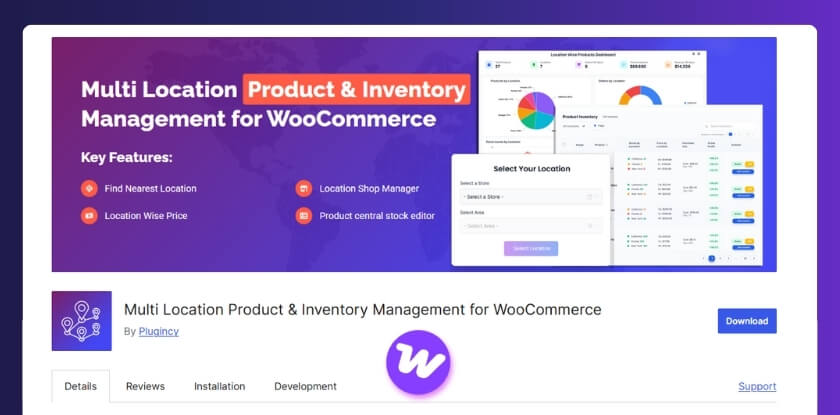
One practical option is: Multi Location Product & Inventory Management for WooCommerce (Plugincy)
Why This Approach Works
A dedicated multi-location system is built to handle inventory across multiple warehouses or stores without relying on disconnected plugins or manual sync.
This helps you:
- Maintain real-time inventory updates across all locations
- Automatically deduct stock from the correct warehouse
- Sync inventory, pricing, and order logic in one system
- Avoid conflicts caused by multiple plugins
What You Can Fix with a Structured System
With the right setup, you can:
- Eliminate stock mismatch across locations
- Prevent overselling due to delayed updates
- Ensure consistent inventory from product page to checkout
- Manage all locations from a single dashboard
- Improve fulfillment accuracy
When You Should Consider Using It
This approach is especially useful if:
- You manage multiple warehouses or branches
- Inventory updates are inconsistent or delayed
- You rely on several plugins for stock management
- Your store is growing and becoming harder to manage
How This Improves Your Workflow
Instead of troubleshooting issues repeatedly, you move to a system where:
- Inventory updates happen automatically
- Location-based stock is always accurate
- Order processing follows correct stock logic
- Your store runs more efficiently with fewer manual fixes
If you are frequently dealing with WooCommerce inventory not updating or sync issues, switching to a structured multi-location system can simplify your workflow and reduce errors.
Using a dedicated multi-location inventory solution helps WooCommerce stores maintain accurate stock levels, reduce errors, and scale more efficiently across multiple locations.
WooCommerce Multi-Location Inventory Plugins Comparison
Below is a comparison of 3 popular approaches:
- Plugincy (All-in-one system)
- Multiloca / Similar Multi-Location Plugin
- Addify Multi Inventory (premium plugin)
WooCommerce Multi-Location Inventory Plugin Comparison
| Feature | Plugincy Multi Location Inventory | Multiloca / Similar Multi-Location Plugin | Addify Multi Inventory |
| Core Focus | Full multi-location system | Multi-location inventory | Multi-warehouse inventory |
| Multi-Location Support | ✔ Built-in | ✔ Built-in | ✔ Built-in |
| Real-Time Inventory Sync | ✔ Native | ⚠️ Limited / depends on setup | ✔ Available |
| Location-Based Pricing | ✔ Built-in | ⚠️ Limited | ✔ Supported |
| Order Routing by Location | ✔ Automatic | ⚠️ Basic / partial | ✔ Supported |
| Central Dashboard | ✔ Unified system | ✔ Available | ✔ Available |
| Inventory + Orders + Pricing | ✔ Fully connected | ❌ Partial | ❌ Partial |
| Plugin Conflict Risk | Low (single system) | Medium | Medium |
| Ease of Setup | Easy | Medium | Medium |
| Scalability | High | Medium | Medium |
| Best For | Growing multi-location stores | Basic multi-location use | Mid-level stores |
Which Plugin Should You Choose?
Choosing the right plugin for WooCommerce multi-location inventory depends on how complex your store is and what level of control you need.
Instead of comparing features again, here’s the simplest way to decide:
Choose Plugincy (All-in-One System) 👉 Best Overall Choice
Go with this if:
- You want inventory + pricing + order routing in one system
- You are managing multiple warehouses or stores
- You want real-time sync without conflicts
- You plan to scale your store
Why:
- Everything works together
- No need for multiple plugins
- Lowest chance of inventory errors
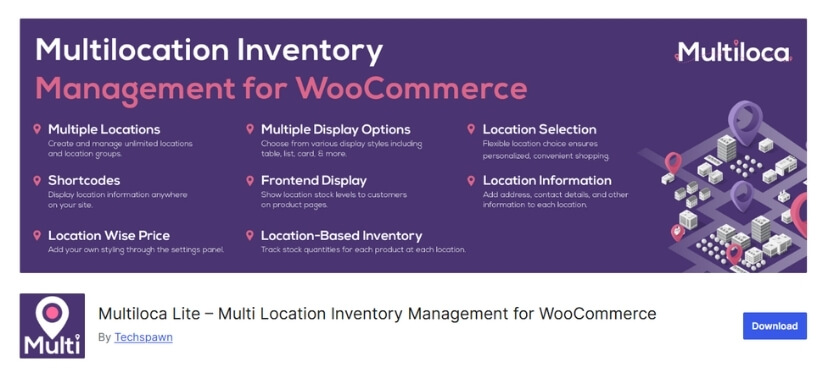
Choose Multiloca 👉 Best for Simple Multi-Location Setup
Go with this if:
- You only need basic multi-location stock management
- Your store is small or mid-sized
- You don’t need advanced automation or pricing logic
Why:
- Easy to set up
- Handles core multi-location needs
- Lightweight solution
Choose Addify Multi Inventory 👉 Best for Structured Warehouse Control
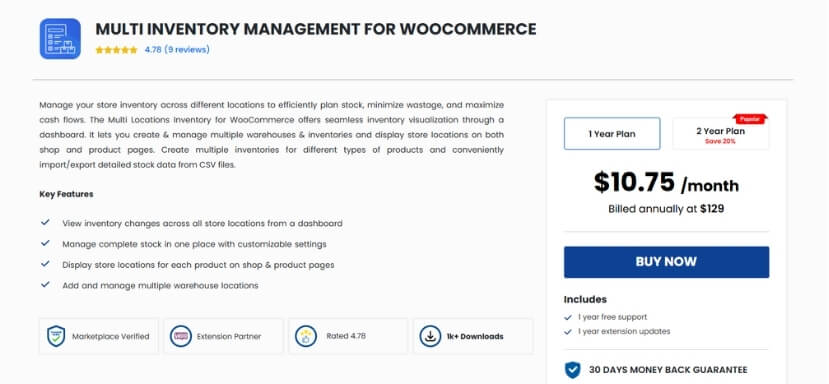
Go with this if:
- You want warehouse-level inventory management
- You need per-location pricing support
- You are okay managing some logic manually
Why:
- Good balance of features
- More control than basic plugins
- Works well for mid-level setups
Quick Decision Table
| Your Situation | Best Choice |
| Want full system (inventory + pricing + orders) | 👉 Plugincy |
| Need simple multi-location stock only | 👉 Multiloca |
| Want warehouse-based structured control | 👉 Addify |
Frequently Asked Questions (FAQ)
Why is my WooCommerce multi-location inventory not updating?
This usually happens due to sync issues, plugin conflicts, caching problems, or incorrect location configuration. When inventory logic is not properly connected, stock updates fail across locations.
Does WooCommerce support multi-location inventory by default?
No, WooCommerce does not support multi-location inventory natively. You need a plugin or custom system to manage stock across multiple warehouses or store locations.
How do I fix WooCommerce inventory not updating after an order?
First, check if stock management is enabled and orders are reducing stock correctly. Then review plugin conflicts, caching settings, and ensure the correct location is assigned during checkout.
Why is stock different for different locations?
This usually indicates a sync issue or incorrect location assignment. Each location must be properly configured, and inventory updates must be shared across all locations in real time.
Can caching cause inventory update issues in WooCommerce?
Yes, caching can show outdated stock data. If product or cart pages are cached, customers may see incorrect inventory levels instead of real-time updates.
Is a plugin better than custom development for multi-location inventory?
For most stores, a plugin is easier to manage, faster to set up, and more reliable. Custom development is better for highly specific workflows but requires ongoing maintenance.
How do I prevent inventory sync issues in the future?
Use a structured multi-location system, avoid using multiple conflicting plugins, and regularly test inventory behavior across product pages, cart, and checkout.
Final Thoughts
Managing inventory across multiple locations in WooCommerce can become complex very quickly. When stock is not updating correctly, it is often a sign that the system handling inventory, locations, and order logic is not fully aligned.
Fixing individual issues may solve the problem temporarily, but long-term stability comes from using a setup where all parts of the inventory system work together.
Whether you choose a simple plugin, a structured multi-location system, or custom development, the key is to ensure:
- Inventory updates happen in real time
- Stock is deducted from the correct location
- All pages show consistent and accurate data
As your store grows, having a reliable multi-location inventory system becomes essential for avoiding errors, improving customer trust, and scaling operations smoothly.
A reliable multi-location inventory setup helps WooCommerce stores maintain accurate stock levels, prevent sync issues, and support long-term business growth.